House Finders
Problem
UH’s out-of-state students, who are in search of affordable housing outside of dormitories, are faced with several challenges. Students that do not have connections with local residents will struggle to find trustworthy landlords to contact. To lower living costs, most of these students will also need to actively seek suitable roommates while managing other challenges related to moving for college. Additionally, safety is a crucial concern for students that live on their own as they are miles of ocean away from family, especially with the recent rise of criminal activity around the Manoa campus (the most populated campus). While students can live in the dorms, this also introduces several challenges, such as limited availability for each dormitory, a lack of private kitchen and bathroom, and mandatory meal plans that drive up living expenses. Furthermore, many students have also expressed concerns about the condition of the dorms.
Solution
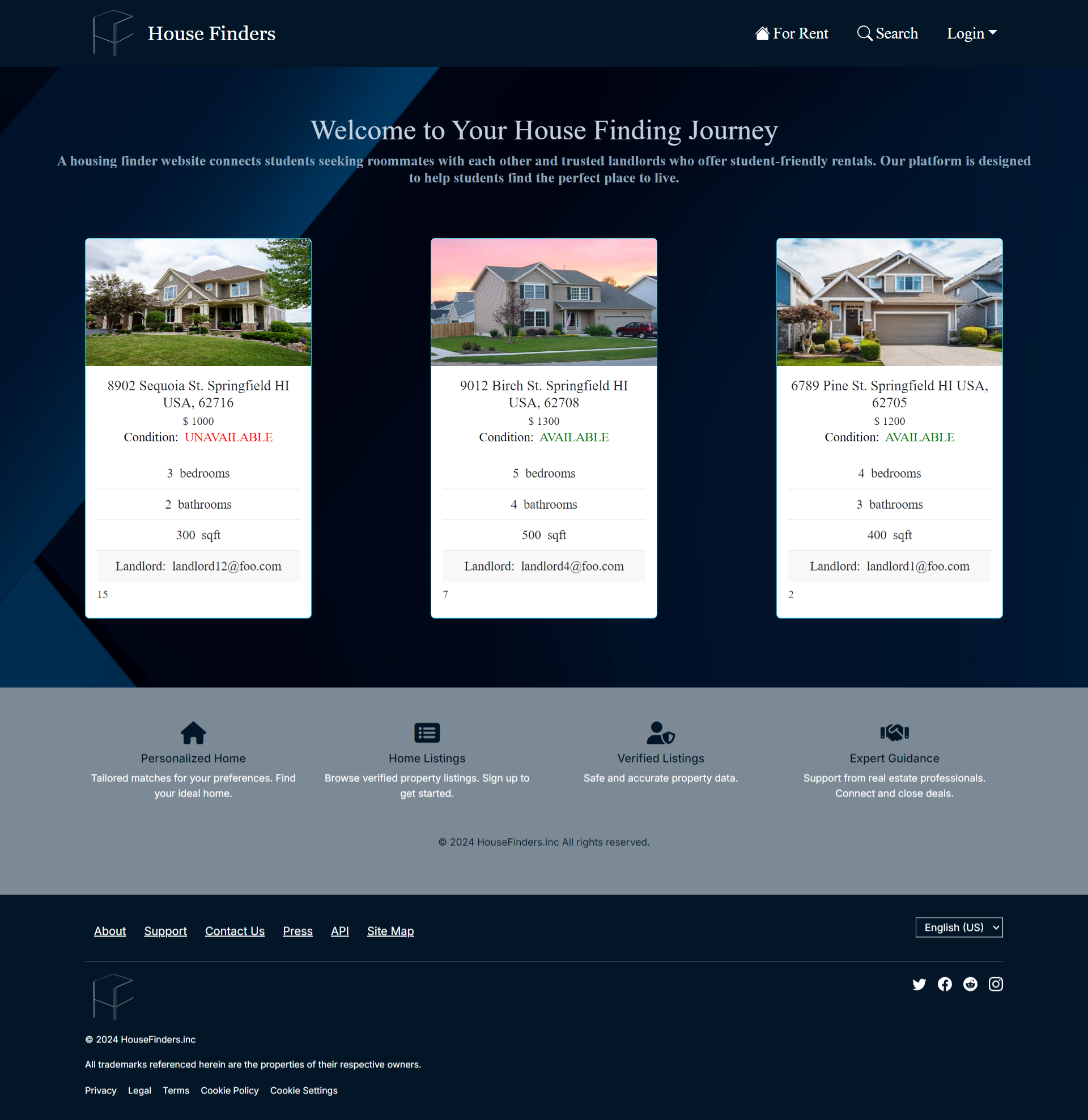
A housing finder website that will help students connect with other students to find roommates, and to also help cultivate a community of trusted landlords that can offer housing for student tenants. This idea would benefit a community of people that need to rent out housing and benefit students that need a place to stay. Safety can be ensured by confirming each person’s identity if their profile is verified and up-to-date, and may also feature a rating system that displays comments from previous tenants. Potentially, different account roles can be included: landlords, guests, users, admin. There is also the potential of sharing geo-location as a feature to show how far users are from prospective renters using React.
Contribution
My contribution to this project involved work on both the back end and the front end. I started by creating the schema for the Subrole model, which allowed us to distinguish users as either Landlord or Renter, and then integrated this logic into the registration form so it would reflect those roles. On the front end, I built the page that displays all available properties, as well as the page that lists a user’s own properties. Along the way, I also helped fix various bugs that popped up throughout development.
Through this project, I learned how to associate a schema with a database model and then tie that into front-end features that users directly interact with. Another key takeaway for me was grasping the difference between client-side and server-side pages, and understanding how to implement features on either side without mixing them up in a way that would cause errors.
You can learn more about this project here.